The Present and the Future
The Screwtape LettersThe Present and the Future describes a struggle over where human attention and desire are placed. In Screwtape’s account, the present is where a person actually encounters freedom, conscience, duty, grace, and pleasure; the future, by contrast, is unknown and can become a screen for anxieties and fantasies. The distinction is not between thinking ahead and never doing so, but between planning a particular duty now and giving one’s heart to an imagined outcome. Across the letters, the war supplies concrete tests of this principle: both fear of what may come and confidence that things will turn out well can draw the patient away from the demands of the moment.
The Present as the Ground of Action
Screwtape introduces the principle against the background of a lull in the European war and a corresponding lull in the patient’s anxiety. Either tortured fear or foolish confidence may serve Hell, he argues; the relevant question is what occupies the patient’s attention. Humans live in time, while God intends them for eternity. The present matters because it is the point at which time touches eternity: it is the only moment in which people experience freedom and actuality, and the only moment in which they can answer conscience, bear a cross, receive grace, or give thanks for pleasure.
This account makes the present more than a brief interval between past and future. Attention to eternity means attention to God; attention to the present means attending to the action or response actually called for now. The two orientations oppose the habit of living in anticipation, because the present is where a person’s choices become real rather than merely imagined. Screwtape therefore treats present attention as spiritually dangerous to Hell when it involves the patient’s actual duty, rather than a self-satisfied belief that everything will be fine.
The letters distinguish such attention from turning inward to inspect one’s own emotional condition. Elsewhere, Screwtape’s strategy is to make the patient examine whether he feels devout or charitable instead of looking beyond himself to God and his neighbours. Conversely, a fear becomes easier to manage when he recognizes it as a present state of mind and regards it as a cross to bear. The distinction is not simply between inner and outer attention: the decisive issue is whether reflection helps him meet the present reality or diverts him from it.
Why the Future Becomes a Trap
Screwtape regards the future as especially useful to tempters because it is unknown, while human passions already tend toward it. Thought about what is coming can inflame both hope and fear, but its objects remain unrealities: they have not happened and cannot yet be known. The past, though it can also distract, has determinate content and in that respect resembles eternity more than the open-ended future does. The present, meanwhile, is described as lit by eternal rays.
The contrast extends to the emotional habits associated with different temporal directions. Gratitude looks back and love attends to the present; fear, avarice, lust, and ambition look ahead. Screwtape uses lust to clarify the argument: the future-directed anticipation belongs to the sin, whereas the pleasure, when it arrives, belongs to the present and is not itself the part of the process that interests Hell. His point is that temptation often locates its leverage in what a person expects to obtain, not in the immediate experience that follows.
Screwtape also associates future-centred thinking with systems that attach human affection to an anticipated historical destination, naming Creative Evolution, Scientific Humanism, and Communism. His concern is not merely that people make predictions or plans, but that they invest their hopes and identity in outcomes they cannot possess now. Such investment can make present honesty, kindness, and happiness seem expendable: real gifts become fuel for an imagined future, and a person is kept in pursuit of an end that continually recedes.
Planning Without Living in Anticipation
The distinction is not a rejection of foresight. God, in Screwtape’s account, wants people to think about the future when that thought is needed to plan acts of justice or charity likely to be required tomorrow. Planning tomorrow’s work is itself today’s duty. Its subject matter comes from the future, but the responsibility to plan is experienced and undertaken in the present.
Screwtape sets this practical foresight against emotional dependence on results. A person may work for posterity as part of a vocation, then release the outcome and return to the patience or gratitude required by the passing moment. Hell instead wants people haunted by a future imagined as either an earthly paradise or catastrophe. They may then break present obligations because they believe that doing so will secure the hoped-for outcome or avert the feared one. Their faith and conduct become contingent on schemes whose results they may never live to see.
The contrast gives the letters’ temporal argument its ethical force: future-oriented planning can serve present justice and charity, while future-oriented attachment can displace them. What matters is not whether tomorrow enters thought, but whether tomorrow’s imagined reward or disaster rules today’s choices. The desired alternative is action in the present followed by relinquishment of the outcome, not passivity or refusal to plan.
Wartime Anxiety, Hope, and False Calm
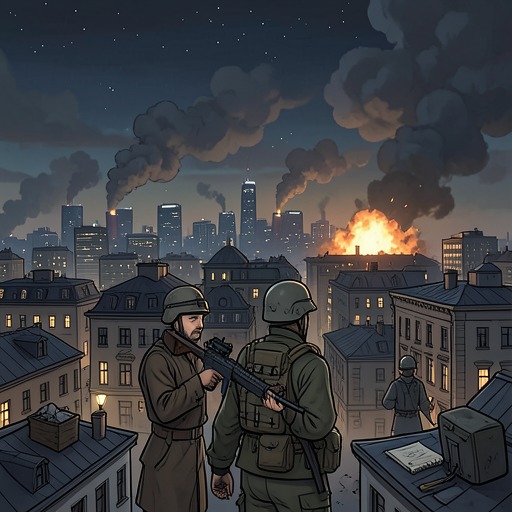
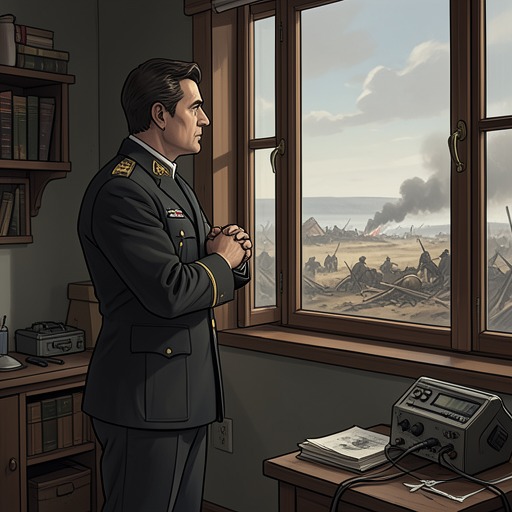
The patient’s responses to the European war illustrate how either anxiety or hope can keep a person from the present. At the war’s beginning, Wormwood is excited by the patient’s sleepless night and emotional distress. Screwtape rebukes him for confusing delight in suffering with effective work: the relevant question is whether the patient’s reaction can be turned into a lasting weakening of faith and virtue. The war itself is not automatically useful to Hell; its spiritual consequences depend on how the patient attends and responds.
When the war later pauses, Screwtape considers both fear and confidence potentially advantageous. A person who feels calm because he assumes the future will be pleasant is not necessarily living in the present. If the calm depends on false hope, its collapse can produce disappointment and impatience. By contrast, someone who acknowledges that danger may come, prays for the virtues needed to meet it, and attends to present duty is a threat to Hell. Even enjoyment of work and good health may keep a person in the present without conscious spiritual reasoning; Screwtape still wants that natural, unselfconscious happiness disrupted.
The framing also limits the war’s place in the book. The author’s note says that its history matters only when it impinges on the spiritual condition of an individual, and that Screwtape has no general interest in the European War. This makes the conflict a pressure on personal attention and conduct rather than an independent historical narrative. The letters repeatedly bring discussion back from the scale of war to the patient’s immediate spiritual condition.
Fear, Fatigue, and the Test of the Moment
As the threat of air raids approaches, Screwtape’s instructions reveal how future fixation can operate through both terror and reassurance. He advises Wormwood to cultivate fear, but also to keep the patient imagining that the raid will not recur and that he will soon enjoy his bed. False expectation makes fatigue harder to bear because a person thinks the strain is nearly over; he may resolve to endure only for a reasonable period, set shorter than the trial itself. The trap is not simply dread of danger but a conditional willingness to meet it only until relief is expected.
The same pressure appears in Screwtape’s advice about cowardice. Rather than let the patient follow a simple instruction to remain at his post and do his duty, Wormwood should encourage him to rehearse possible escape routes and imagined precautions. These mental alternatives keep attention on a hoped-for way out instead of the present obligation. Yet cowardice carries a risk for Hell: a person who discovers his own failure may gain painful self-knowledge, repent, and become humble. Screwtape therefore recognizes that crisis can force moral questions into view that ordinary life allows people to ignore.
The first raid demonstrates the difference between feeling afraid and failing to act. The patient is very frightened and considers himself a coward, but he does what duty demands and perhaps more. His behavior includes irritability toward a dog that trips him, excessive cigarette smoking, and forgetting a prayer; nevertheless, Screwtape treats the central fact as his fulfilled duty, not his fear or the smaller lapses. The episode gives the temporal principle a practical measure: the patient’s success is not a serene prediction about survival, but action in the dangerous present.
Screwtape’s account of fatigue complicates the idea that hardship must produce spiritual failure. Unexpected demands on someone already tired can turn disappointment into a sense of injury, and moderate fatigue may make peevishness more likely than complete exhaustion. But once a person has ceased expecting relief or even thinking half an hour ahead, weariness may instead become humbled and gentle. The temptations depend on keeping hope alive in a distorted form: Wormwood is told to make the patient expect an end to the strain, so that he will yield just when he believes endurance is no longer required. The contrast between such conditional endurance and bearing what comes to him returns the argument to its central claim: the present is where duty is done, while imagined futures can either prepare for that duty or become excuses to evade it.